
Did Subash Chandra Bose really go up in flames...or has the truth been smothered in smoke? Netaji didn't just disappear into a mangled wreck; he disappeared into the obscure depths of one of India's greatest mysteries. This will be a journey through lost files, shadowy testimonies, and unsettling questions that refuse to die. So, join me, readers...to uncover the truth of an unsung hero, who didn't deserve such a clandestine end.
Our journey starts right in the middle of 1945. Imperial Japan has now been put on the back foot. The Japanese have lost their foothold on the Indian Subcontinent, dashing the hopes of the Supreme Commander of the Indian National Army. Having lost almost all military assets, and with Imperial Japan on the brink of surrender, Bose was put in a precarious situation. In a last ditch attempt he boarded a Japanese military plane to Manchuria where Soviet forces were closing in. He had hoped to join hands with the Soviets in his fight against British Imperialism. On the fateful day of 18 August 1945, all his aspirations went up in flames and the trail went cold...or did it?
Clear Skies with a Clouded Truth
Just two days after Japan's surrender, Bose boarded a Japanese Bomber at around 2PM in Saigon. He aimed to land in Manchuria along with a planned stopover at Taihoku (present-day Taipei). The bomber he was flying in was the Mitsubishi KI-21 twin-engine heavy bomber.
Eyewitnesses in Saigon recall a hurried departure under heavy guard with no fanfare, no farewell. Some claim they saw the plane faltering mid-flight, others reported smoke trails. These accounts are highly sceptical as these are only based on oral testimonies and not physical evidence. The story goes that, after the supposed plane crash, Netaji exited the plane drenched in gasoline.
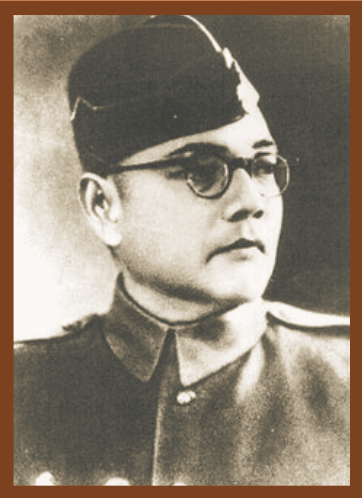
Of the seven people reportedly on board, four survived the crash. Yet intriguingly, both the Shah Nawaz and Khosla Commission reports—India's earliest official investigations into Netaji's death—relied almost entirely on the testimony of just one survivor: Col. Habib-ur-Rahman. A senior officer in the Indian National Army (INA) and a close comrade of Bose, Col. Habib was the only non-Japanese among the survivors. The absence of any formal testimony from the three Japanese survivors, despite their critical proximity to the event, has long raised eyebrows. Why were their voices missing from the official record? And could Col. Habib's loyalty to Netaji have painted his version of events?
His clothes caught fire, and he received third-degree burns. The news of his death was circulated around the world within hours of the crash, but the circumstances seemed murky, and suspicion soon followed.
The KI-21 bomber was codenamed 'Sally' by the allied forces. It was initially code named 'Jane', but it was quickly changed because General Douglas MacArthur didn't exactly like the idea of an enemy bomber named after his wife.
Survivors, Secrets and Silence
- Col. Habib-ur-Rahman - Chief-of-Staff to Bose in the INA [Survived]
- Lt. Gen. Tsunamasa Shidei - Vice-Chief of Staff, Imperial Japanese Army (Kwantung Army) [Perished]
- Lt. Col. Shiro Nonogaki - Imperial Japanese Army Air Force [Survived]
- Lt. Col. Tadeo Sakai - Imperial Japanese Army (air officer) [Survived]
- Pilot (name unknown) - Imperial Japanese Army Air Service Officer [Perished]
- Co-pilot (name unknown) - Imperial Japanese Army Air Service Officer [Perished]
Buried Truths and Hidden Conspiracies
Over the decades, several prominent conspiracy theories have emerged about Netaji Subhas Chandra Bose's alleged escape and his possible life afterward. In this article, I have explored and debunked several of them. Below are some of the most talked-about theories, some of which I've closely examined and debunked.
- The Plane Crash Was Faked
- Bose Escaped to the Soviet Union
- Bose Lived in India as a Sadhu (Gumnami Baba Theory) [Debunked]
- British or Congress Conspiracy to Eliminate Bose [Debunked]
- Secret Government Files Are Still Hidden
- Bose Escaped to China or Southeast Asia
A Temple, Some Ashes, and Some Question Marks
After Netaji's alleged death, no physical body was ever recovered, and no trace of the aircraft wreckage was officially found or documented. Strangely, not a single verified photograph of the crash site exists. What was offered as proof were ashes, purported to be Bose's remains. These are housed at the Renkoji Temple in Tokyo, where interestingly the descendants of Lt. Gen. Tsunamasa Shidei continue to pay homage to his ashes annually.
Every year, on 18 August, the monks at the Renkoji temple hold a memorial service for Bose even though the Indian government had never officially confirmed the ashes to be Bose's (Because even temple walls whisper that the legend lives on...)
In 2005, during the proceedings of the Mukherjee Commission, a request was made to conduct a DNA test on the ashes. The findings were startling. The remains did not belong to Bose, but to Ichiro Okura, a Japanese soldier who had died of cardiac arrest. This revelation not only deepened the mystery...it shook the very foundation of the official narrative.
Figgess Report (1946): A Blatant Lie from the British?
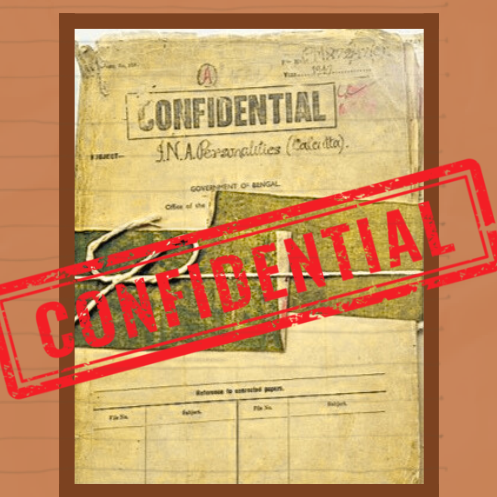
One of the most important facts about the Figgess Report is that it was kept classified and withheld from the batch of Indian Political Intelligence (IPI) files declassified in 1997. A photocopy of the report surfaced later, anonymously donated to the British Library, where it now resides in the European manuscripts collection.
What the Report Claimed
Bose died in a military hospital in Taihoku (Taipei) between 1700 hrs and 2000 hrs, on August 18, 1945. The cause of death was said to be heart failure due to multiple burns and shock. It cited the reports of multiple Japanese interrogations including survivors like Lt. Col. Nonogaki and Lt. Col. Sakai, the doctor – Dr. Yoshimi, and multiple other witnesses involved in the cremation and transportation of the ashes.
Why the Story Doesn't Hold Up
- As previously discussed, the ashes kept at Renkoji Temple in Tokyo—claimed to be Bose's—were DNA tested and found to be of Ichiro Okura, an ordinary Japanese soldier, not Bose.
- Every witness cited in the report was either a Japanese military officer or closely connected to the Japanese armed forces.
- The only non-Japanese witness, Col. Habib-ur-Rahman, was deeply loyal to Bose, which may have affected the objectivity of his testimony.
- If the report truly offered 'conclusive' proof, why was it hidden for decades and only revealed through an anonymous leak?
The original Figgess investigators travelled undercover in Japanese uniforms, posing as Axis sympathizers to secure interviews.
The Figgess Report claimed to close the case, but it rests on limited, potentially biased sources. Its key assertion regarding the ashes has been scientifically disproven. Instead of solving the mystery, it has become another suspicious layer in the long trail of misleading narratives.
Timeline of Key Events
| Historical Event | Date |
|---|---|
| Japan Surrenders and Bose tries to contact the Soviets | 15 Aug 1945 |
| Bose boards his fateful flight in Saigon | 17 Aug 1945 |
| Alleged plane crash at Taihoku | 18 Aug 1945 |
| Figgess report: A report full of lies? | 25 Jul 1946 |
| Shah Nawaz Committee plants a seed of doubt regarding Bose's death | 5 Apr 1956 |
| Khosla Commision: The first step towards uncovering the truth | 30 Jun 1974 |
| Mukherjee Commission: Is this the final truth? | 8 Nov 2005 |