यदा यदा हि धर्मस्य ग्लानिर्भवति भारत। अभ्युत्थानमधर्मस्य तदात्मानं सृजाम्यहम्॥
“O Bharat, whenever the sacred fire of Dharma dwindles with the rise of Adharma, that is when I manifest to guard the world from its own ruin.”
Throughout history, humanity has been haunted by the fear of its devastation. Every civilisation has witnessed its fair share of oracles—no wonder there exist so many prophecies about the supposed ‘end of the world’. But a commonality remains between all these predictions—the clash between the divine and the dark shall destroy all unrighteous visions, and the prevalence of Dharma would be the perfect ‘happy ending’.
Sanatana culture is no different. Since the ancient era, wielders of the celestial wisdom have categorised time into four segments: the Yugas. As one Yuga wanes and the other appears in the twilight of time, a divine manifestation rises from the rubble of civilisation. It eradicates all wrongs to restore balance on the Earth. With Krishna's departure, the Dvapara Yuga (the third Yuga) descended from the horizon, paving the way for the Yuga of Kali, an age of murk and degeneracy.
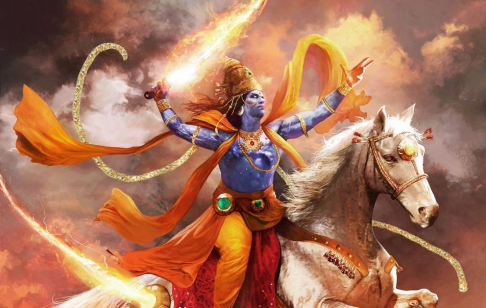
The Indian timeline attributes the modern day to Kaliyuga, where humanity is smitten with devilish emotions. But a single ray of light is enough to crack dawn in the duskiest skies. In our scriptures, that eternal light graces the Earth as the tenth and final avatar of Shri Hari.
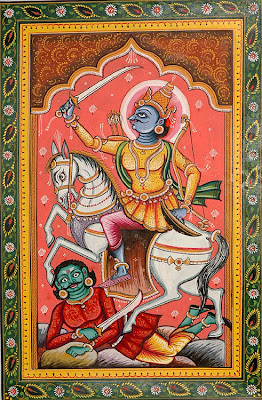
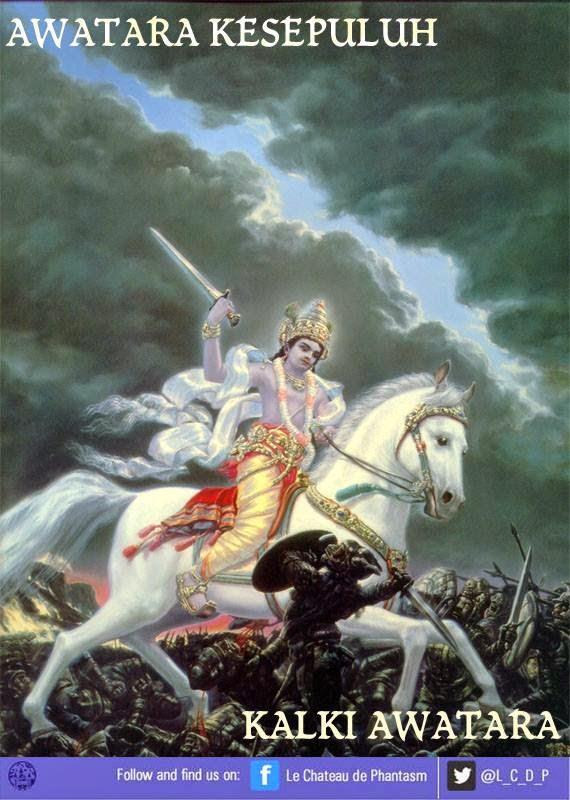
“His eyes emanate divinity, his arms capable of lifting the Samsara from its misery. As Kali’s torment crosses all zeniths, he shall return. Mounted on a white horse, even his silhouette shall radiate his beauty. With a sacred sword in his hand, he shall go to war against the world and bring it back from the very edge of catastrophe. He is Kalki.”
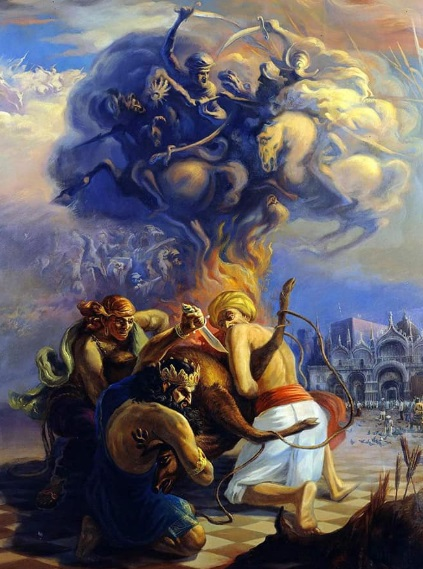
Although Kalki's tale is widely known through the Kalki Purana and Bhavishya Purana, Odia folklores offer a vivid portrayal of the shift from Kaliyuga to Satyuga, a transformation like none other, from the darkest abyss to eternal light. It all began in medieval Odisha, when a group of saints—the Panchasakhas— prophesied the apocalypse in a textual record, the Bhavishya Malika, drawing from Puranic sources and their prophetic powers.
Advent of the Saviour
Kalki's birth is surrounded by numerous legends—the Vishnu Purana suggests he shall be born in Shambhala, the mobile hamlet invisible in normalcy, while regional lores (like the Bhavishya Malika) pinpoint his birthplace to various locations, especially in Odisha or Maharashtra.
The astrological alignments at his birth are a rare one, with the Sun, Moon and Jupiter in the same constellation—the Pushya Nakshatra. It last occurred on 27 July 2014 IST and shall next occur in 2037. Interpretations suggest that Kalki has already been born in 2014 and, as prophesied, secretly awaits the right time to emerge.
Kalki's childhood is supposedly one of great physical and mental training. Every warrior has a Guru. In Kalki's case, it is Parashurama, who has sustained through aeons in the Mahendragiri hill in Odisha, destined to prepare his own successive version for the ultimate war.
The Final Battle
The intellectuals of the past didn't visualise the apocalypse in the form of a mythical war between the Gods and demons, but a modern war amongst armed nations. This war was to be World War III, although interestingly, at the time it was prophesied, even the first two world wars hadn't occurred.
The prelude to the war would be symptomatic of destruction. The world would be smitten by epidemics of unknown diseases and psychological ailments, famines and economic collisions—much of which is already visible to us, be it the Corona virus and other influenza epidemics, high depression and suicidal rates amongst the youth, international disputes and standoffs, or even the global tariff war.
A spark of clash during vulnerability would engulf the world in its fiery dance of blood. Thirteen nations, referred to as the Yavanas (historically denoting the west), would join hands with an eastern superpower, interpreted by some as China, and would strike Bharat as a celestial avalanche, leaving desolation in its wake.
ଏକାକାଶରେ ଦୁଇଟି ସୂର୍ଯ୍ୟ ଉଦୟ ହେବ। ସପ୍ତ ଦିନ ସୂର୍ଯ୍ୟ ଆଲୋକ ନ ଦେଖିବା, ଆକାଶ କଳାରେ ଆବୃତ।।
As war drums would intensify into thunderous explosions, legends foretell two Suns dawning in one sky, turning into seven days of prolonged dusk—interpreted as the second Sun being a nuclear missile that would cover the world in dark clouds of ash and shadow.
କଳିଯୁଗରେ ମହାଭୟ, ନୀଳାଚଳରୁ ହରିବେ ଦେବ। ଶୂନ୍ୟ ହେବ ଶ୍ରୀମନ୍ଦିର, କାଳିଙ୍ଗରେ ହେବ କାଳ-ଦୁର୍ଭିକ୍ଷ।।
The war wouldn't merely be political; it would be spiritual. Communal violence would take over the streets. Intolerants would vandalise pilgrimage sites. As mentioned in folklores, “In broad daylight, invaders would steal the idols of the lords of Puri—Jagannatha, Subhadra and Balabhadra—from the Shrimandira”.
The departure of the divine from the pious land of Puri would be symbolic of the withdrawal of Dharma from the Samsara. This would begin the climax of the story, as Odisha would turn into a blood-bathed battlefield. Natural forces would take over Puri as it would drown in the sea, much like the fate of its western counterpart, Dwarka.
The dead warriors of the great War of Kurukshetra would be reborn to attain a second chance in this war. They would indeed quake the battlefield, crying the war to an even greater echelon.
The Divine Intervention
When the war reached its acme, a silhouette would appear in the debris of cosmos, of a swordsman on a stallion, who would singlehandedly defeat an army of fourteen lakh mercenaries, bringing the war to an end and reestablishing Dharma. He would restore the hearts (Brahma Padartha) of the lords of Puri in new bodies (Nabakalebara), erecting a new temple and a new spiritual capital of the world.
As Satyuga would prevail, the little survivors of war would restart civilisation from the remnants of the bygone and guide the world with the luminescence of newfound righteousness.
Kalki's tale might just be a reflection of the insights of the great saints and sages Bharat has seen. But its realistic approach and intricate plotline emphasise the current global situation and the need to bring about humanity. Our heritage is not merely a vivid fabrication of intertwined myths, rather an echo of the truth, and a warning that—
“Man can create worlds, yet in the same breath, destroy them all.”