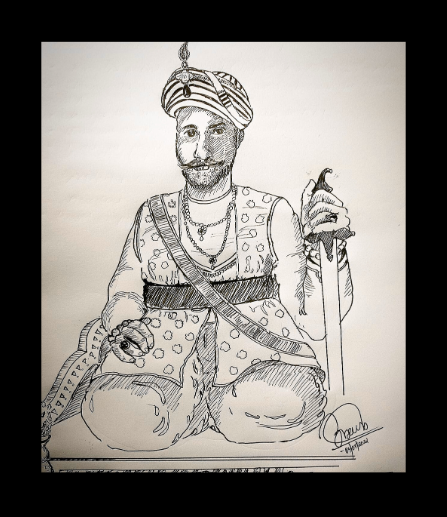
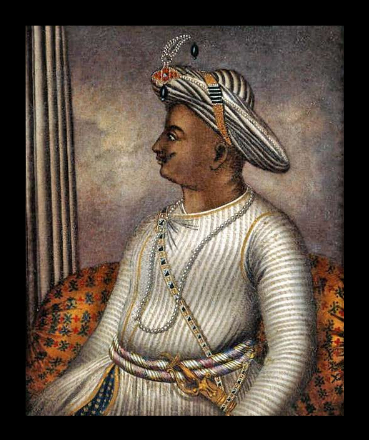
Tipu Sultan is a very well-known name. He was born in 1751 in the soil of Devanahalli (near present-day Bangalore), Karnataka. He was the son of Hyder Ali, a revered military officer of the kingdom who later became the Sultan.
Legends say that once, while hunting with a friend, Tipu encountered a vicious tiger. He fought against that wild beast using a dagger after his gun abandoned him, and this incident earned him the title of the "Tiger of Mysore", depicting his valiance and heroism. Tipu Sultan was widely known for his tactical military resistance against the British colonial expansion. One of his notable tactics included the use of rockets in warfare, mainly his iron-cased "Mysorean rockets".
The British Lens
However, Tipu Sultan remains a complex historical figure, stirring different sentiments among people of different regions and cultures. He was portrayed as barbaric, fanatical, and tyrannical in the British archives. This portrayal was primarily because of all the challenges the British had to face due to him. British letters, reports, and diaries describe forced conversions, mass killings, and temple and church destruction during Tipu's campaigns. They accused him of enforcing Islamic culture through violence and genocide against the Christians and Hindus, especially in the regions of Malabar and Coorg.
But most Indian historians deemed this as the colonial version of history, which was partly to justify their own invasions and wars against Mysore during the four Anglo-Mysore Wars (1767–1799). It is said that British officials like Richard Wellesley conspired to create a narrative that depicted Tipu as a religious despot. They allegedly exaggerated figures—such as claiming 70,000 to 80,000 Kodava captives, despite the total Kodava population being only around 65,000, only to justify their aggressive military campaigns in Mysore.
Reforms and Tolerance
Tipu was not only a tactical military strategist, but he was also the harbinger of a Mysorean renaissance. His contributions include the introduction of the reformed landrevenue structure and the issuing of new coin denominations, which were largely glorified in ancient texts.
Tipu had issued grants for the management of the Ranganathaswamy Temple. The Sringeri Matha archives preserve at least 30–47 letters written in Kannada by him, where he displayed his reverence for Hindu traditions and also gifted a crystalline Shivalinga as a sacred token. Following a Maratha raid that looted the Matha, he condemned the act and sent two hundred Rahitis (gold coins) to fund the reconsecration of the idol, also ordering military action to protect the Matha and punishing those who had attacked the holy institution. This stands in contrast to his false depiction by the British, who identified him as a "religious despot".
He had also made endowments to numerous other temples in his kingdom. All these records indicate that Tipu was a religious pragmatist and was tolerant of other religions, which was completely irreconcilable to what the British archives suggested.
Accusations of Atrocities and Forced Conversions
In contrast to records highlighting Tipu's tolerance for other religions, there exist many other inscriptions and manuscripts which report the mass deportation of 60,000 Christians from Canara to Seringapatam, and the demolition of their properties and 27 churches.
Other inscriptions mention that stones from churches were used to build military fortifications like the Sultan Battery. It is also found that many prisoners were forcibly converted and tortured with severe forms of punishment, including the amputation of limbs and public humiliation by being marched through the city.
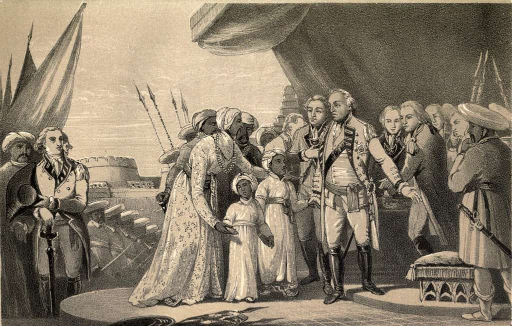
Tipu captured up to 30,000 Nairs, forcibly converting them to Sunni Islam; those who refused were humiliated, tortured, or killed. Many Nairs died in captivity, and only a few survived to return to Malabar.
British and missionary accounts (supported also by Hindu narratives) report widespread temple and church demolitions, like the Milagres Church, various Christian establishments in South Canara, and Hindu temples in Malabar and Coorg. Further atrocities were described in these inscriptions.
A Divided Legacy
In conclusion, there are different perspectives on Tipu Sultan's legacy.
Some historians refer to him as a contemporary of the last powerful Mughal ruler, Aurangzeb, because of their similarity in their barbarian, harsh and despotic treatment towards people of other faiths, often calling Tipu's reign a genocide, while others claim that he was a testament of secularism, there are debates and controversies on whether or not Tipu Jayanti should be celebrated every year to honour Tipu's legacy.
Due to the divided opinions of people and the contrasting nature of the evidence on his life, it would be wrong to conclude anything at all about such an influential and well-known historical figure. We can only state that he was a great military and economic administrator who fought for his kingdom with all his might. But whether or not he can be termed as a "freedom fighter" or "tolerant of religion" is debatable.